
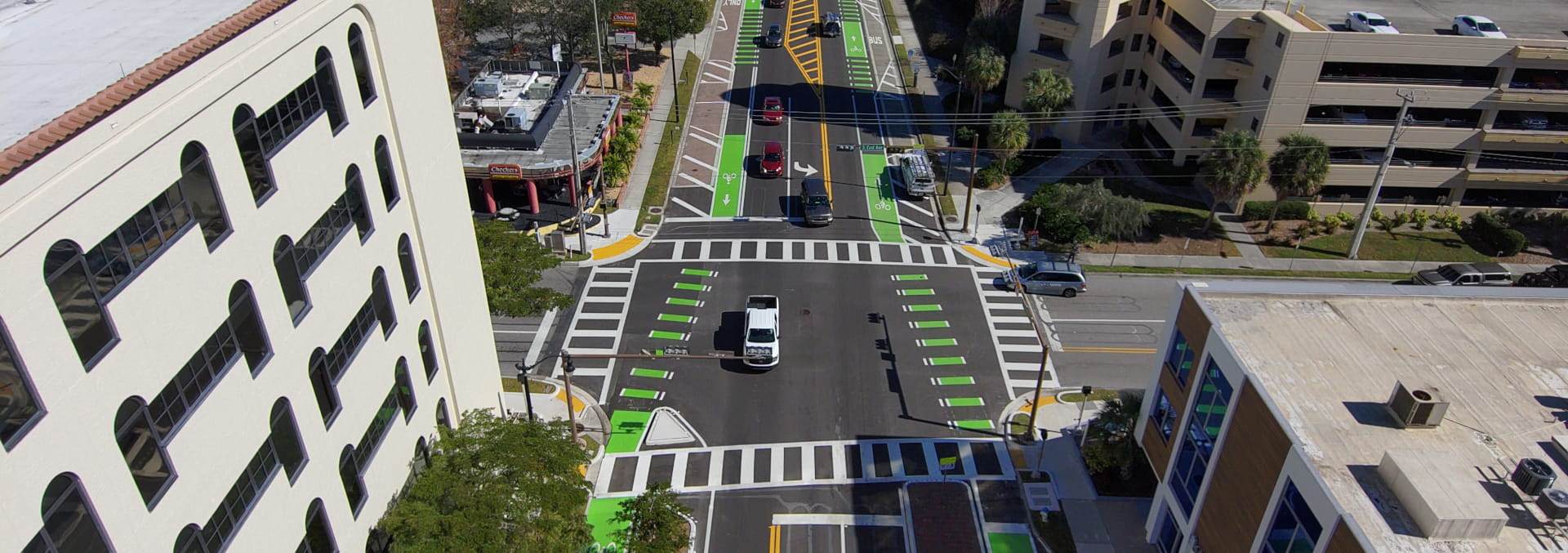
Active Transportation
B&N’s Active Transportation practice brings together planners, engineers and community engagement specialists who understand that mobility is about more than moving people. It’s about improving lives.
We partner with cities, regional agencies and state DOTs to develop and implement multimodal transportation solutions that reflect community priorities, increase safety and expand access for people of all ages and abilities. From Safe Routes to School initiatives and ADA transition planning to regional trail networks and complex urban corridor retrofits, our teams understand what it takes to advance projects from vision through construction.
Our Active Transportation leaders are embedded in communities across the country, supported by a national bench of technical experts in planning, safety, funding strategy, data analysis and design. Whether addressing a single corridor or shaping a long-range plan, B&N helps clients make meaningful progress toward their active transportation goals with a focus on feasibility, impact and equity.
Services
- Active Transportation Planning: Development of pedestrian, bicycle and multimodal policies and plans that advance community goals and prioritize safety, equity and connectivity.
- Trail, Bikeway and Shared Use Path Design: Engineering on- and off-road facilities, including shared use paths, protected bike lanes, greenways and regional trail networks.
- Complete Streets Design: Roadway redesigns that accommodate all users including pedestrians, bicyclists, transit riders and drivers, regardless of age or ability.
- Vision Zero and Safety Services: Data-driven analysis and planning to reduce traffic fatalities and serious injuries, including systemic safety studies and high-injury network identification.
- Safe Routes to School (SRTS): School travel planning, infrastructure recommendations, program strategies, walk audits and design support to improve safety and encourage walking and biking to school.
- Multimodal Corridor Studies: Comprehensive analysis of corridors to support mode shift, reduce level of traffic stress, and improve access to key destinations.
- Micromobility Integration: Planning and policy guidance for integrating shared mobility options like e-scooters and e-bikes into local transportation networks.
- Transit Supportive Infrastructure: Planning and design of first/last mile connections and supporting infrastructure that provide safe, convenient access to transit stops and stations.
- ADA Assessments and Accessible Design: ADA evaluations, transition plan development and design of accessible pedestrian facilities that remove barriers and improve mobility for all users.